
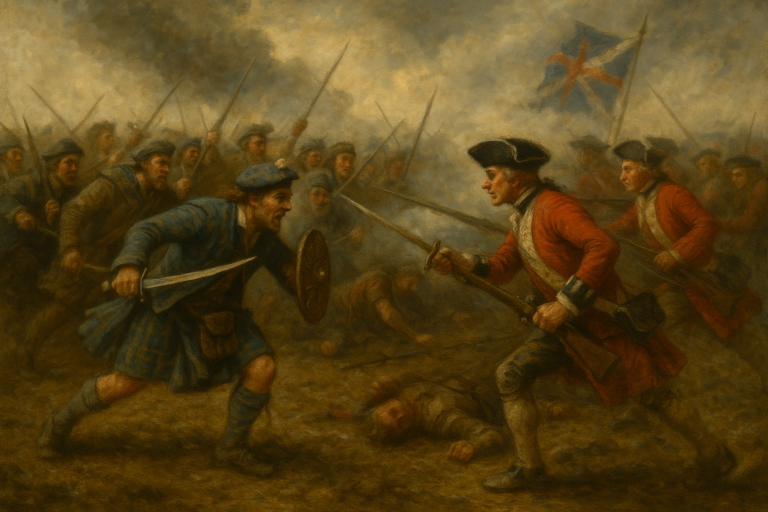
In the early 1700s, the British throne had shifted to the House of Hanover after the end of the Stuart line. The supporters of the exiled Stuarts, known as Jacobites, did not accept this change. They viewed James Francis Edward Stuart as the rightful monarch. He lived in exile in Europe with a court that was largely Catholic. His hope was to gather enough political and military support to reclaim his family’s position in Britain.
During that same period, Freemasonry was beginning to take shape as a recognized fraternity. Lodges were appearing in various cities across Europe. One of the characteristics that made these lodges unusual for their time was that men of different Christian backgrounds could meet together in a setting where religious arguments were not permitted. Members promised to treat one another honorably, to keep politics outside the lodge room, and to uphold certain moral obligations.
This new atmosphere created an unforeseen difficulty for the Jacobite movement. Many Catholic men who supported the Stuarts began to join Masonic lodges. Once inside the lodge, they met Protestants as brothers rather than rivals. The bonds formed within the Craft made it harder to preserve the kind of strict division that political leaders often relied upon. Unity in the lodge room did not serve the Jacobite effort, which depended on separating Catholic loyalty from the new British government.
The Stuart court looked toward Rome for assistance. At this time, the Papacy was held by Pope Clement XII. He had no governmental authority to place the Stuarts back on the throne, yet he did possess the power to influence Catholics across Europe. Freemasonry worried him for several reasons. He disliked the secrecy, the private oaths, and the difficulty of knowing what societies of men might do behind closed doors. He was an elderly pontiff who viewed secret associations with caution.
In 1738, Clement XII issued a decree known as In Eminenti Apostolatus Specula. This document instructed Catholics to avoid Masonic lodges. The reasoning he listed included concerns over undisclosed meetings, obligations taken in private, and the mixing of men of different religions in a single organization. The decree warned that Catholics who ignored this instruction would face spiritual penalties.
The political effect of the decree was significant. It discouraged Catholic participation in Freemasonry at a time when their involvement complicated Jacobite plans. The Papal Bull did not restore the Stuart monarchy, and the movement ultimately collapsed after the Battle of Culloden in 1746, yet the decree remained in force.
The question many people ask today is why the rule was never reversed. The reason lies in Catholic teaching. When a Pope issues a formal ruling on matters connected to faith or morals, later Popes do not simply withdraw it. To do so would create a conflict with the doctrine of Papal consistency and authority. Although today’s Church understands that modern Freemasonry is not an engine of political upheaval, the original ruling cannot be simply nullified without raising internal theological issues.
For this reason, the Church maintains the position that Catholics should not join the Craft. Modern Freemasonry continues to work in harmony with all faiths, and many practicing Catholics attend lodge meetings in countries where enforcement is relaxed. The official prohibition, however, remains in place because it was created during a crisis in eighteenth century Europe, and Church law does not allow for an easy reversal.
The division did not begin with anything immoral in our rituals. It began with a political struggle long settled. The Church maintains the rule because its system of authority requires consistency across time.
That is the heart of the matter.
History created the restriction. Doctrine keeps it in place.

2 Responses
A very clear explanation of the present standing between Freemasonry and the Church of Rome. Appreciate the clarity of the written piece. I present papers like this one as education at different lodges in my district. Will check with some masters and our District Deputy to see what they think about reading this in lodge. Thank you
Great article Bro. Denyer.